Exploring the future of employee benefits: Balancing cost, care and employee experiences
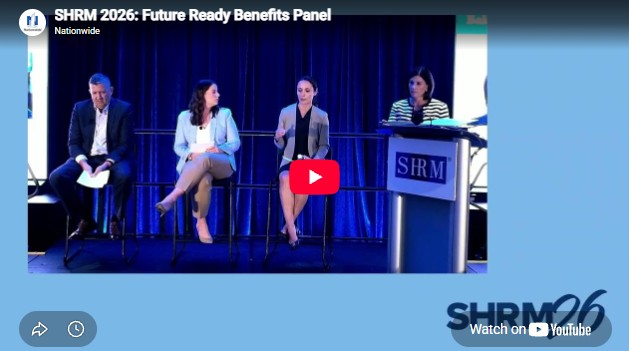
The employee benefits industry continues to evolve as workers seek out options that are personal, flexible and relevant to their everyday lives. To provide insights on this rapidly shifting market, Lindsey Murray, president of Nationwide Group Benefits, recently joined Dave Przesiek, chief revenue officer of Ryan Specialty Benefits and Gwen Tormey, president of Corestream at the 2026 SHRM Annual Conference & Expo.
Their conversation, moderated by Nationwide Group Benefits Vice President Amy Mattingly, explored the emerging market trends and practical strategies that can support employers in designing and delivering modern benefit solutions. Check out the panel presentation, as well as some key takeaways from the discussion below.
As employee expectations continue to evolve, how are employers rethinking the total benefits package – and how do medical and voluntary solutions work together to meet those expectations in today’s market?
Key takeaway: Employers and brokers are seeing a clear shift in employee expectations. A one-size-fits all approach when it comes to products is no longer going to be effective. Benefits need to feel personal, flexible and relevant to everyday life, while still helping employers manage costs. Medical benefits remain the foundation, but voluntary and lifestyle offerings play a growing role in making the package feel more tailored, tangible and valuable across different needs and life stages. The bigger challenge is not just offering the right mix of benefits; it’s communicating clearly so employees understand and use them. Employers want partners who can connect medical and voluntary benefits into a simpler, more cohesive experience that balances affordability, access and quality care.
How can benefits providers, brokers and employers help employees fully understand plan offerings?
Key takeaway: Benefits providers, brokers and employers have a duty to help employees fully understand plan offerings, especially in today’s environment where things may feel complex and overwhelming. The goal is to think like a consumer: explain options in simple, clear terms and design information for people who may only have seconds to engage with it. Use tools like testimonials, infographics and streamlined enrollment experiences to make benefits easier to evaluate and use.
Carriers and brokers share responsibility for taking a more consultative approach with employers as well, helping them assess what their associates need, walking through the pros and cons of available solutions and building flexibility into products so people can get the most value from their coverage. Carriers and brokers are in the business of helping employers offer protection to their employees, but they should also focus on demystifying offerings, improving the overall benefits experience and helping people achieve better health outcomes.
How can employers manage benefits costs without compromising the quality of care and support employees need?
Key takeaway: Rising family premiums and worker contributions are forcing employers to manage benefits more strategically. At the same time, they still must devote the largest part of their budget to medical coverage. In this environment, self-funding paired with stop loss coverage is becoming a more attractive option, giving employers flexibility to tailor benefits for associates while protecting themselves from major financial risk – especially as million-dollar claims have doubled since 2019. Employers shouldn’t think of cost, care and experience as competing priorities; they can build these plans in a way that creates employee experiences that both attract and retain talent.
Additionally, instead of focusing solely on pricing, employers should start with smarter plan design, using claims data to pinpoint where costs are actually rising and pairing with transparent, targeted savings strategies. The goal is to bring together the right benefits, partners, technology and enrollment experiences so employers can better control spending while employees still get clear, high-quality and accessible support.
NFM-25587AO.1
07/2026