Mid-Year Outlook: Key Trends Shaping the Construction Industry in 2025
By Ben Ayers, AVP, Senior Economist, Nationwide
The construction industry enters the second half of 2025 facing a complex mix of economic pressures and evolving market dynamics. The Nationwide Economics team recently released its Mid-Year 2025 Construction Industry Report, which highlights several key trends:
- Overall Construction Activity: Spending has leveled off amid high interest rates and policy uncertainty. Nonresidential construction is particularly vulnerable to these headwinds.
- Labor Market: Hiring has slowed, wage growth has normalized and job openings have declined – but labor supply remains a long-term concern.
- Input Costs: Material price inflation has eased but remains elevated. New tariffs and global supply chain disruptions could reignite cost pressures.
- Construction of Buildings: Growth has moderated, especially in commercial and manufacturing sectors. Infrastructure spending remains a bright spot, though future funding is uncertain.
- Heavy and Civil Engineering: Public investment in highways and utilities continues, but political shifts may impact future funding.
- Specialty Trade Contractors: Labor shortages and rising costs challenge profitability, especially in residential trades.
These trends highlight the need for construction businesses to adopt proactive strategies to navigate the uncertainties and maintain profitability. For a deeper look into these trends, read on or check out the podcast below for more commentary.

Deep Dive
Industry Trends: A Plateau in Construction Activity
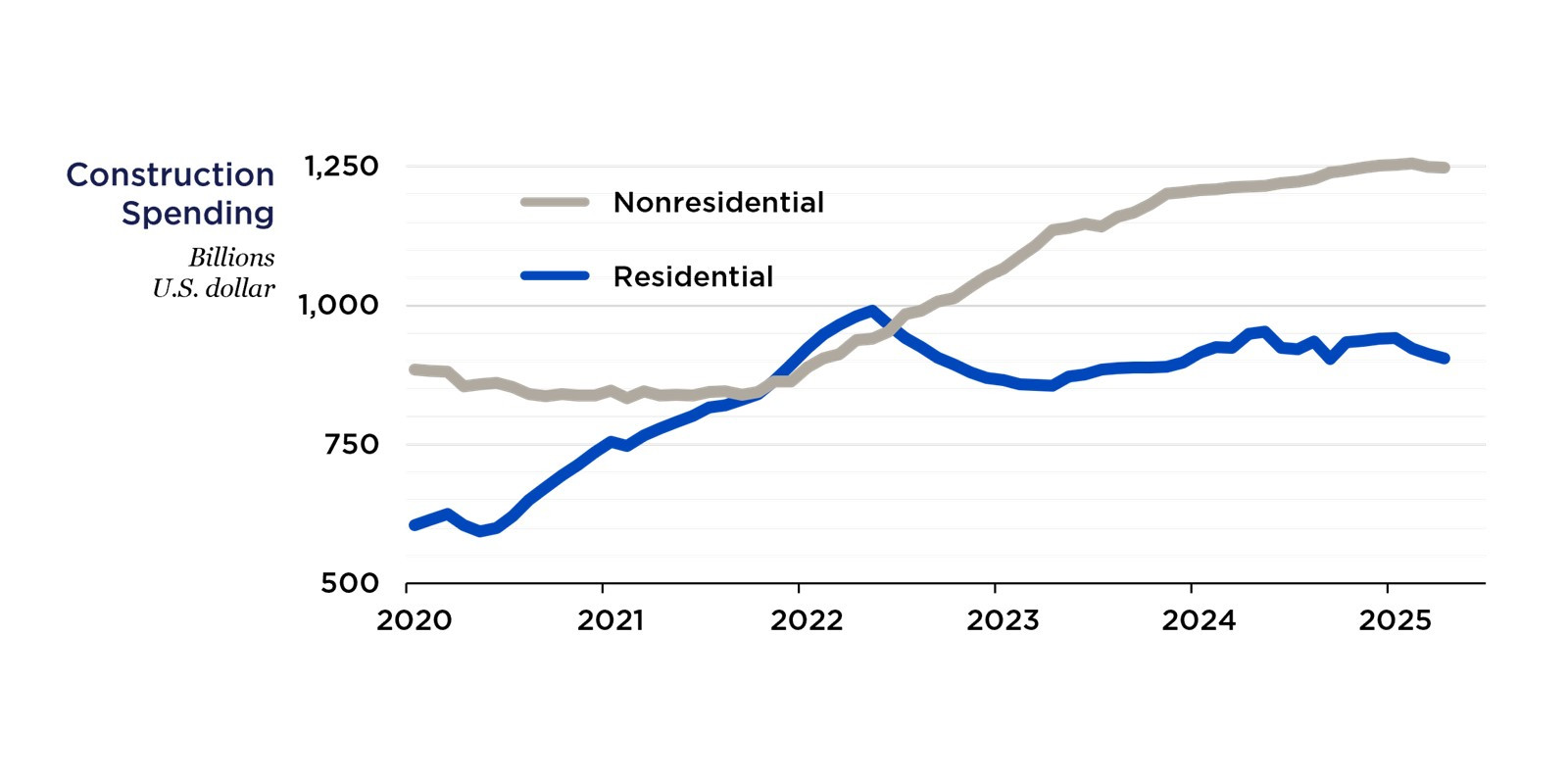
Construction spending has stagnated over the past year, with both residential and nonresidential sectors feeling the impact of elevated borrowing costs and economic uncertainty. The Dodge Construction Index – a leading indicator of nonresidential activity – has weakened, suggesting continued softness through the remainder of 2025. While government stimulus has supported select sectors like healthcare and education, broader investment remains cautious. Tariffs on imported materials and shifting fiscal priorities further cloud the outlook.
Labor Trends: Cooling Demand, Persistent Shortages
The construction labor market, which rebounded strongly post-pandemic, is now showing signs of cooling. Job openings have declined below pre-COVID levels, and wage growth has returned to historical norms. However, structural labor shortages persist, particularly in skilled trades. Immigration policy and visa restrictions could further constrain labor supply. As construction activity slows, hiring is expected to remain subdued through 2025, especially in residential and commercial sectors.
Input Cost Trends: Stabilization with Upside Risk
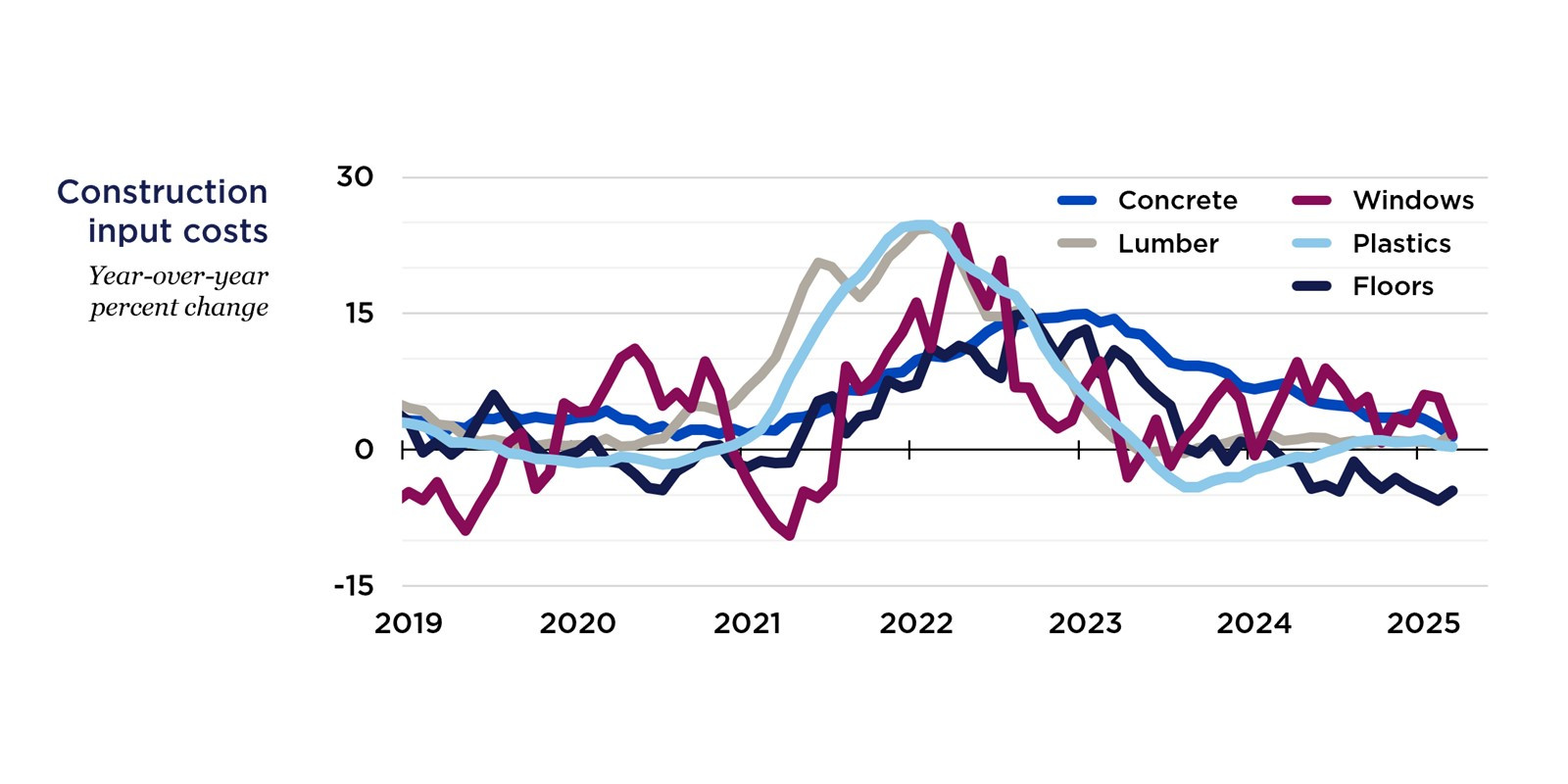
After surging in recent years, construction material costs have stabilized. However, prices remain well above pre-pandemic levels. New tariffs on imports from key trading partners – including China, Canada and Mexico – pose a significant risk of renewed inflation. Businesses are responding by delaying projects, reducing loan demand and investing in productivity-enhancing technologies. The uncertain trade environment and potential supply chain disruptions could keep input costs volatile into 2026.
Construction of Buildings: Moderation Across Sectors
Employment in building construction remains positive but has slowed. Manufacturing construction, which surged following the CHIPS Act, has leveled off. Infrastructure spending from the Bipartisan Infrastructure Law continues to support activity, but future funding is uncertain amid shifting federal priorities. Commercial construction – particularly office space – faces headwinds from economic uncertainty and evolving workplace trends. While reshoring could boost manufacturing in the long term, near-term growth is expected to remain modest.
Heavy and Civil Engineering: Infrastructure Momentum with Political Risk
Public investment in highways, water systems and waste infrastructure has grown significantly, driven by recent federal stimulus. However, contract awards have slowed, and proposed budget cuts from the Trump administration could limit future funding. Labor remains a major cost driver, accounting for up to 35% of expenses in this sector. Tariffs on concrete and other materials could further strain margins. Despite these challenges, the sector remains a relative bright spot in the construction landscape.
Specialty Trade Contractors: Labor-Driven Cost Pressures
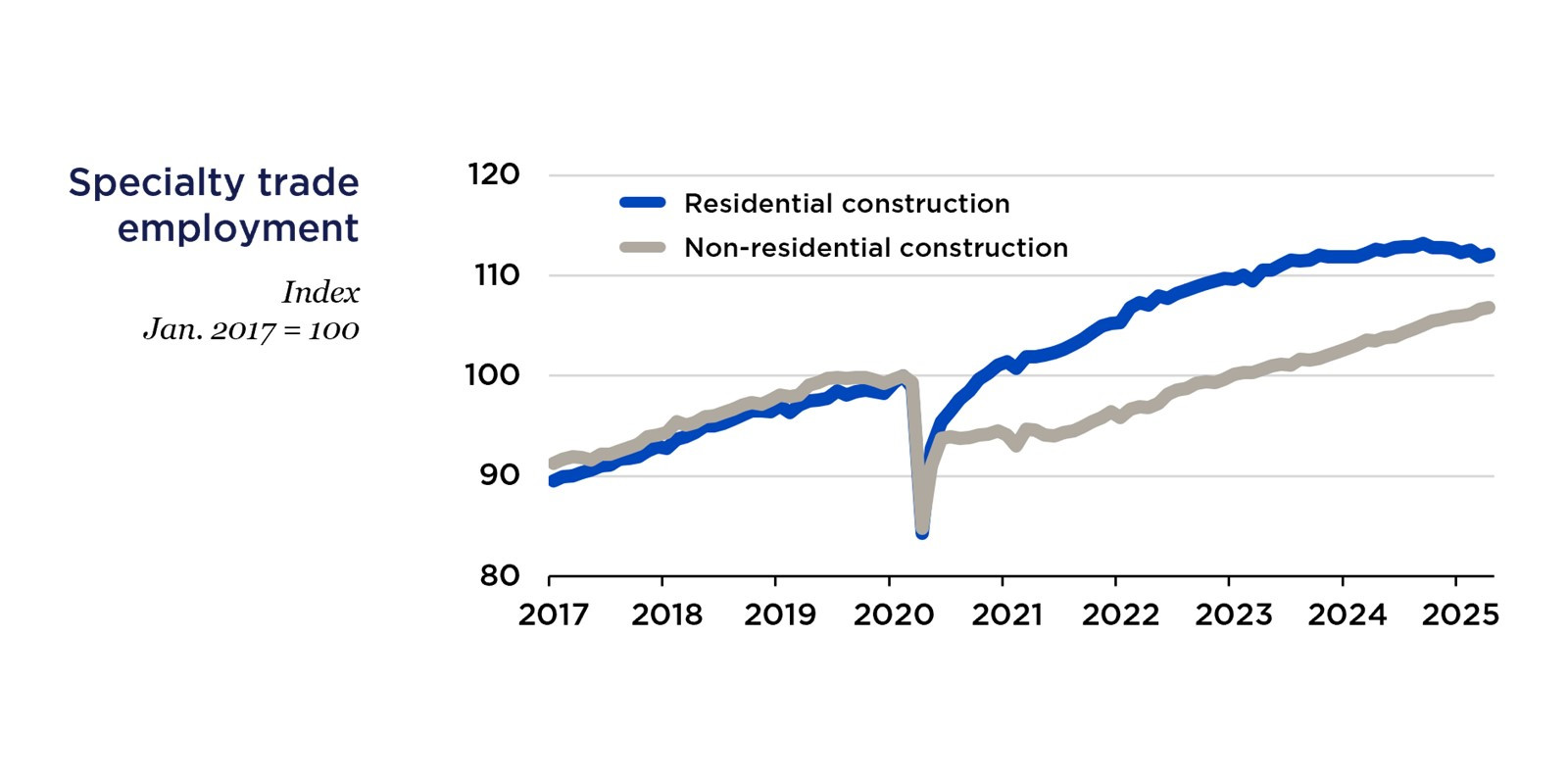
Specialty trade contractors – especially in residential construction – have seen strong demand but face rising labor costs due to persistent worker shortages. Electricians, the largest trade group, are retiring faster than they are being replaced, exacerbating the talent gap. While material cost inflation has eased, tariffs and supply chain disruptions could drive prices up by 5–10% in the coming year. Nonresidential trades are gaining ground, but elevated interest rates may limit growth opportunities across the board.

Nationwide’s Construction Practice Leader, Tonya Hahn:
The Economics team’s report clearly shows that the construction industry in 2025 is defined by economic, political and operational uncertainty. Businesses face a challenging environment marked by rising costs, labor constraints and uneven demand. In this context, implementing robust risk management programs is more critical than ever. Tailored insurance solutions, proactive loss control and expert guidance can help construction firms mitigate risk, protect margins and position themselves for long-term success.