Chetan Kandhari message to Ohio Tech Summit: AI success will depend on people, not just platforms
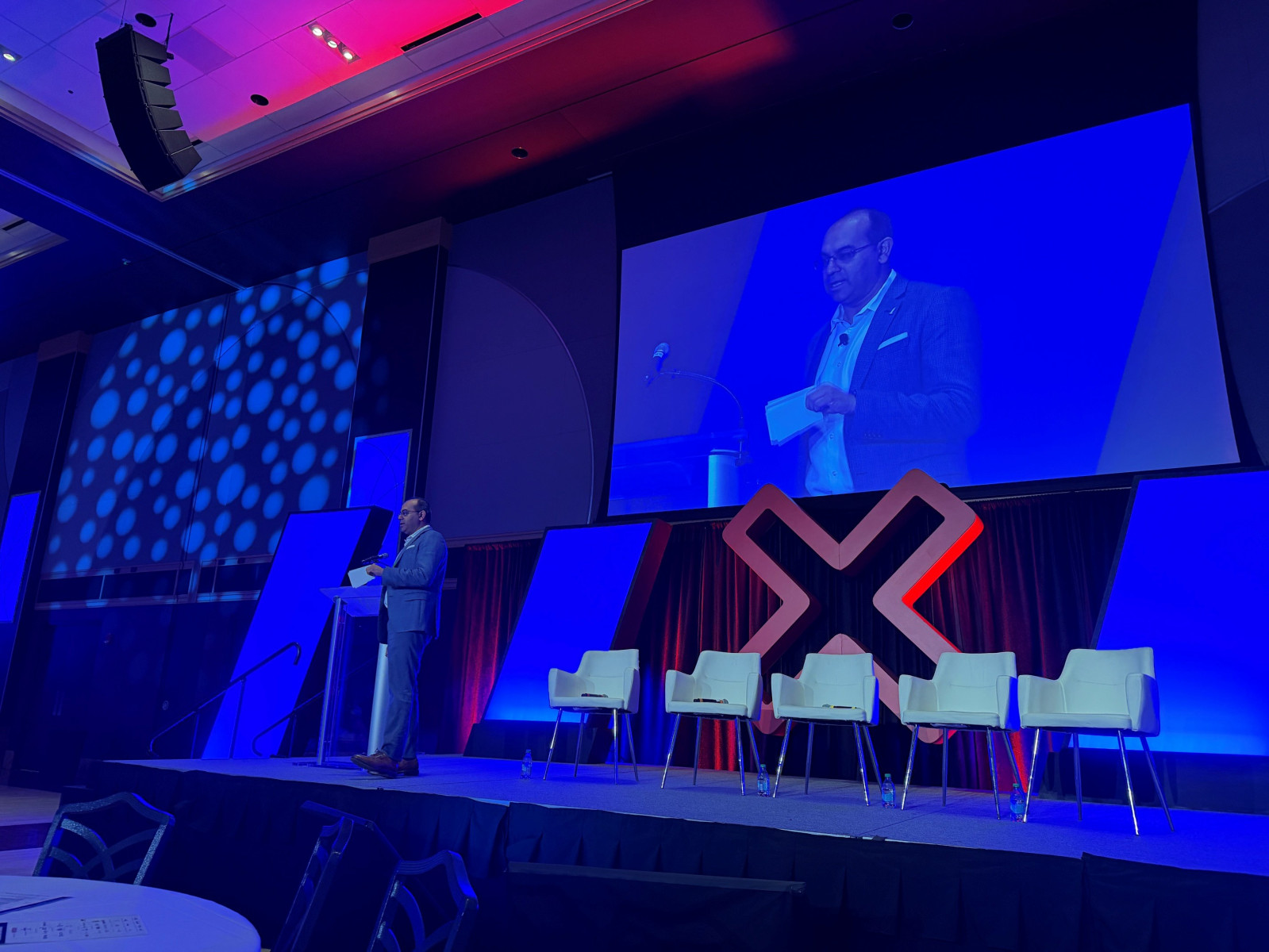
- Nationwide’s Chief AI and Digital Transformation Officer delivered the 2026 Ohio Tech Summit keynote address to a packed house at The Ohio State University on May 14, 2026.
- Kandhari emphasized that cross-functional teams are essential because AI decisions touch technology, business, data and risk at the same time.
- Kandhari stressed that AI adoption requires a behavioral shift as much as a technology investment, with time to learn, experiment and build confidence.
Ohio technology leaders don’t need to start from scratch on AI, but they do need to lead differently.
That was the message from Nationwide Chief AI and Digital Transformation Officer Chetan Kandhari to the 2026 Ohio Tech Summit audience at The Ohio State University.
Kandhari says that the next phase of AI adoption will be defined less by the technology itself and more by how organizations build teams, help people adapt and develop a new leadership mindset.
For Kandhari, the future is clear: AI is no longer a side experiment or isolated technology initiative. It is becoming a business transformation that will redefine how companies work, serve customers and lead through change.
AI works best when organizations build together
According to Kandhari, one of the most important lessons from Nationwide’s own AI journey is that no single function can own this work alone. AI touches business operations, customer experience, governance, data and risk, which means organizations move faster and more responsibly when those voices are at the table from the beginning.
“Nationwide’s own approach reflects that model,” said Kandhari. “The company has used machine learning and AI for more than 15 years, established an Enterprise Analytics Office early in its journey and now has more than 100 models in production. When generative AI accelerated in 2023, Nationwide brought together a cross-functional team from technology, business, data and risk to explore more than 30 use cases, launch 11 pilots and scale six initiatives.”
Kandhari revealed that work helped shape the company’s broader AI operating model, which includes Everyday AI for all associates, Local AI for team-specific problems, Exploratory AI for emerging technology trends, Flagship AI for high-impact transformation and Shared AI Capabilities & Accelerators that help teams build on common platforms and tools instead of starting over each time.
“AI is not just a technology decision – it touches teams across our company,” said Kandhari. “This can’t sit within a single function. Opportunities and risks have to be considered together.”
Real AI adoption depends on changing behavior, not just deploying tools
Kandhari also emphasized that making AI available is not the same as making it useful. Tools matter, but organizations only unlock value when people have the time, support and confidence to apply them in their day-to-day work.
For Nationwide, that has meant pairing technology rollout with adoption support. Kandhari pointed to the company’s rollout of an AI assistant to all associates, connecting it directly to their tools and documents so they can find information and get support in the flow of work. At the same time, Nationwide has continued investing in its Future of Work program, where AI has been the number one topic chosen by associates for three straight years.
The company has also built a network of more than 600 change champions across the enterprise to help teams adopt and apply AI in practical ways. Kandhari framed that as a reminder that successful AI transformation is ultimately a people challenge as much as a technical one.
“Having the tools isn’t enough. People need time to learn, the space to experiment, and the support to understand how AI fits into their work,” expressed Kandhari. “Adoption doesn’t happen just because something is available; it happens when people feel confident and comfortable using it.”
The next era of AI will require leaders to think differently
Kandhari encouraged the audience to have an eye on the future. AI is evolving from systems that follow rules, to systems that generate content, to systems that can increasingly reason through problems and act across multiple steps. That progression, he said, creates a new challenge for leaders who must guide organizations through both the opportunity and the disruption that comes with it.
He pointed to the broader market shift as evidence that this moment is arriving quickly.
“According to a McKinsey study, only about 20% of organizations reported using AI in at least one business function in 2017, that adoption hovered around 50% until late 2022 and that by 2024 it had climbed above 70% as generative AI became accessible to far more people,” said Kandhari.
For Nationwide, that acceleration helped drive a strategic decision in June 2025 to move away from isolated experimentation and embed AI directly into the business strategy, backed by a $1.5 billion technology commitment with more than 20% dedicated specifically to AI.
Kandhari emphasized the real differentiator will be leadership. As AI becomes more capable, leaders must bring both vision and empathy so people feel empowered rather than overwhelmed.
“Leading with AI requires a new mindset. AI – and especially what’s coming with agents – gives us the opportunity to rethink how work gets done. How decisions are made. And how we serve customers,” said Kandhari. “The technology is here. The question now is how we choose to lead with it.”